
A Market Seen from a Distance
Europe’s prime high streets are internationally recognised. Bahnhofstrasse, Avenue Montaigne, New Bond Street and Via Monte Napoleone are well-known reference points for brands, leasing agents and investors. Yet even on these streets, a clear, up-to-date picture can be difficult to obtain.
At street level, the questions are practical: who trades where, which brands sit alongside one another, and what does each frontage look like?
An opening, relocation or closure can change the immediate context of a property. Answering these questions across several European cities often means piecing together information from many different sources.
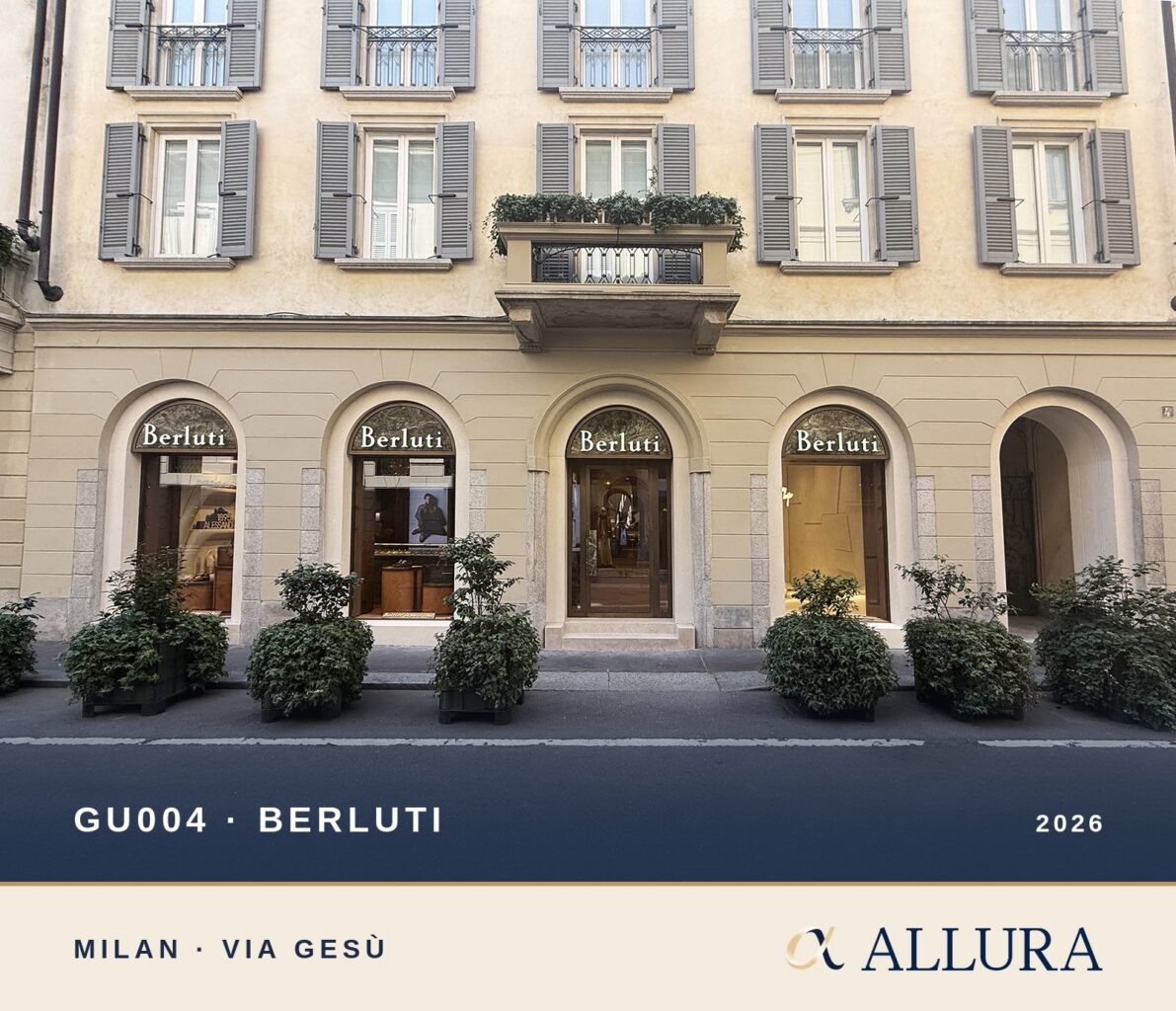
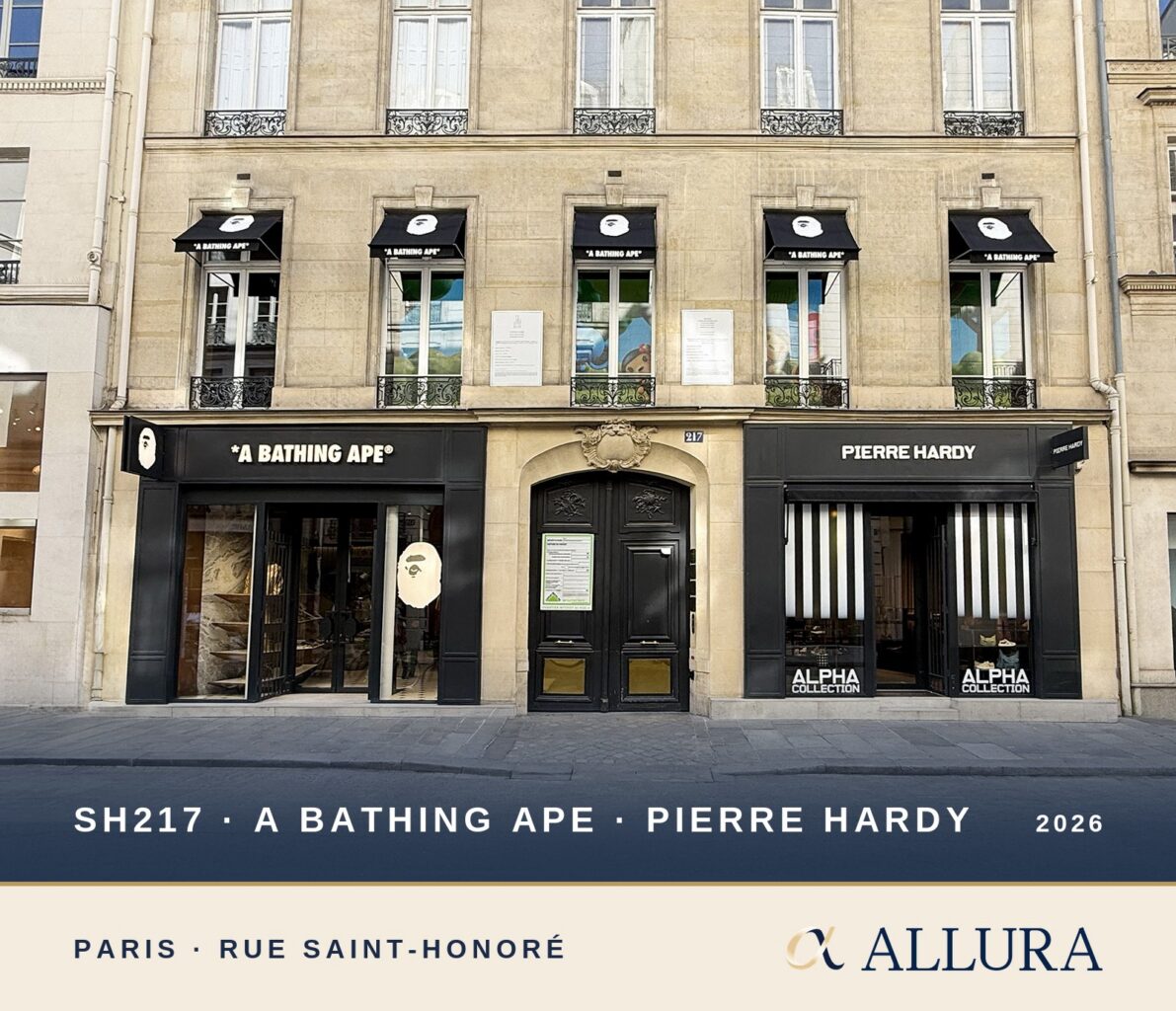
The Limits of Street View
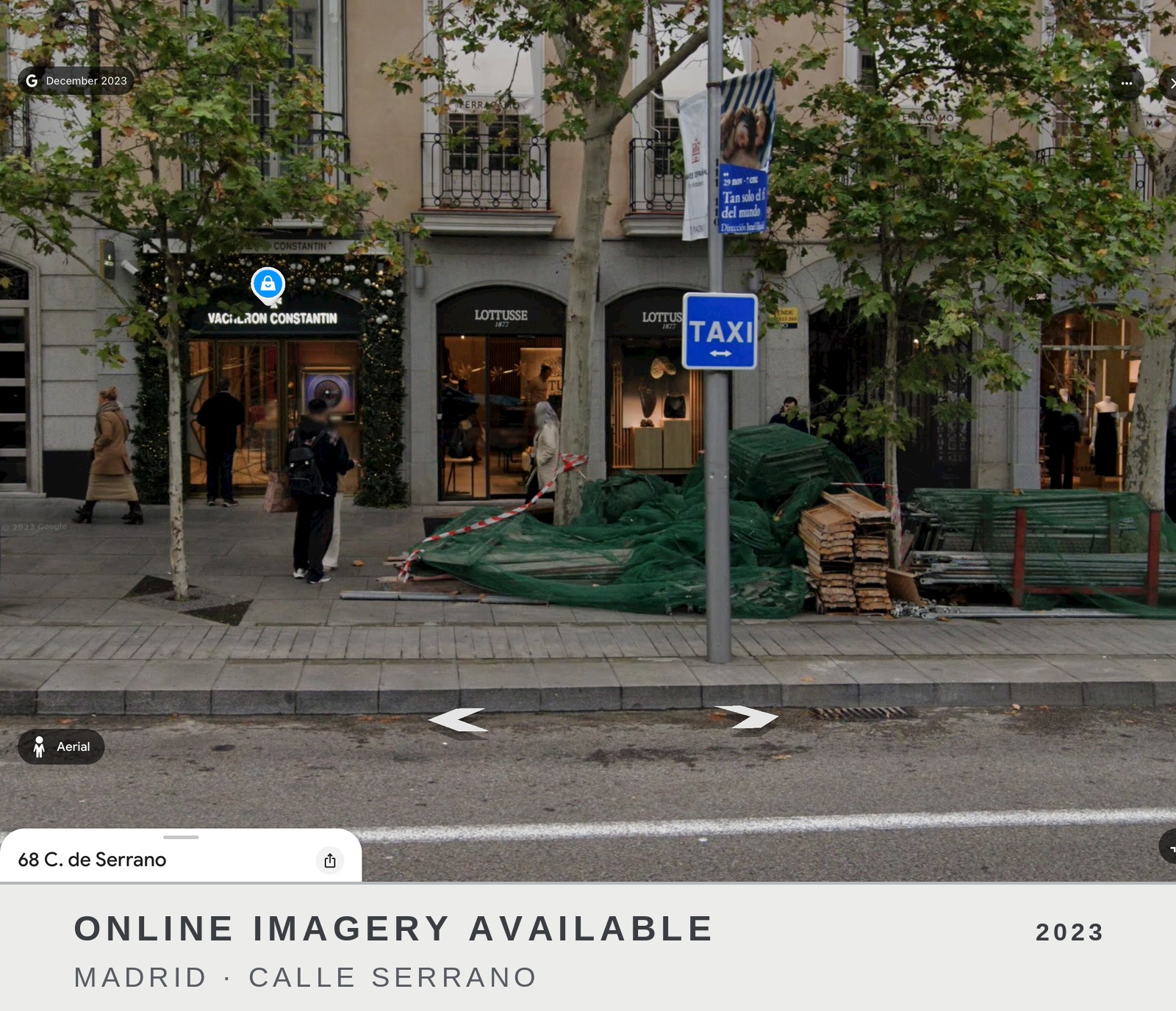
Online imagery is the obvious shortcut, but it was captured for navigation, not retail intelligence. Capture dates vary, trees and vehicles can obstruct the frontages, and pedestrian or waterfront settings are often not covered at all.
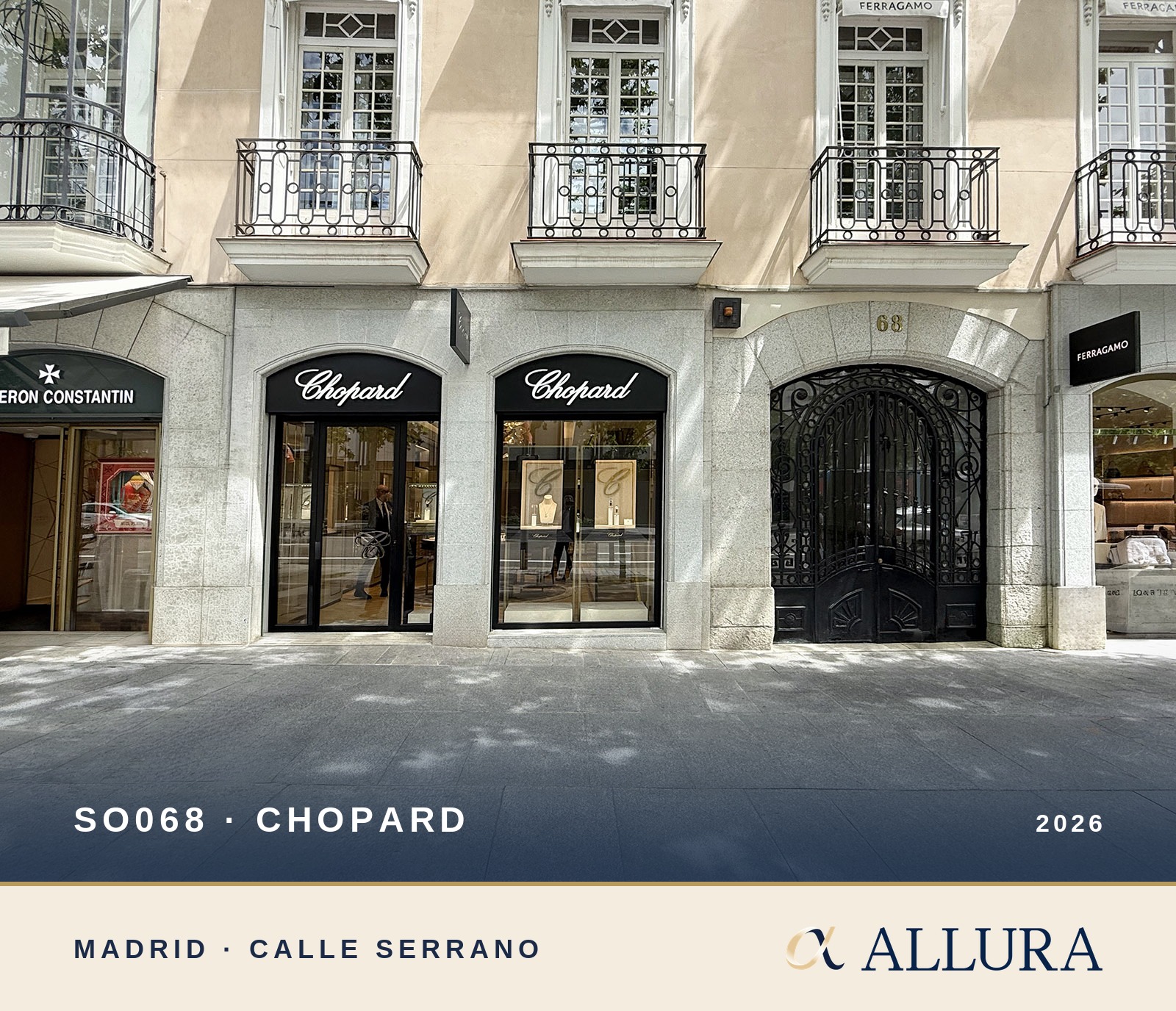
On Calle Serrano in Madrid, the imagery available for number 68 dates from December 2023. Trees, a taxi sign and building materials stand in front of the shops, and the two arched units beside Vacheron Constantin are shown trading as Lottusse. Today, they are occupied by Chopard.
In Puerto Banús, the only panorama of Calle Muelle Ribera available today is a capture from September 2017, taken from the quay and looking away from the storefronts. The Bulgari boutique on the same stretch is barely visible.
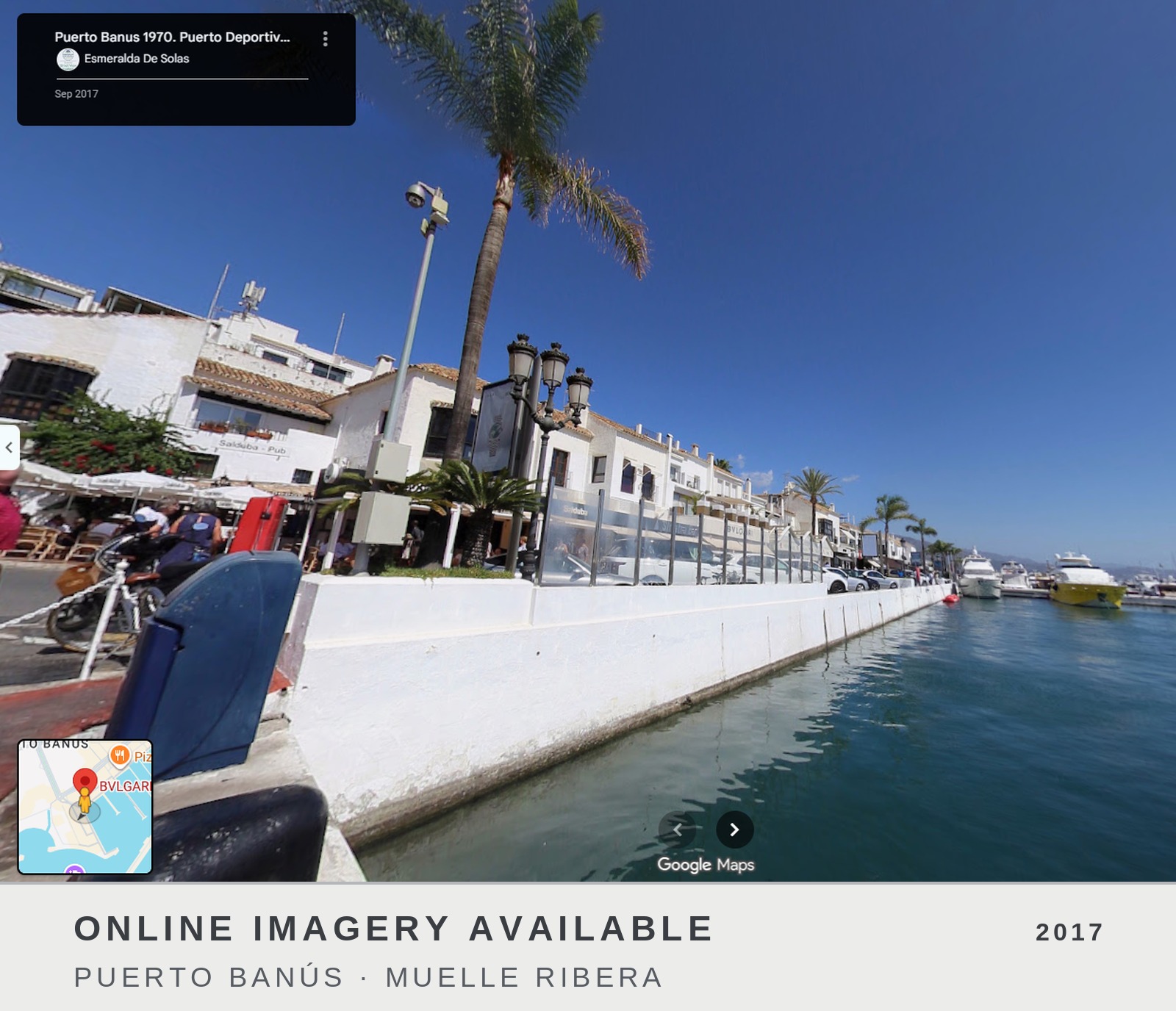
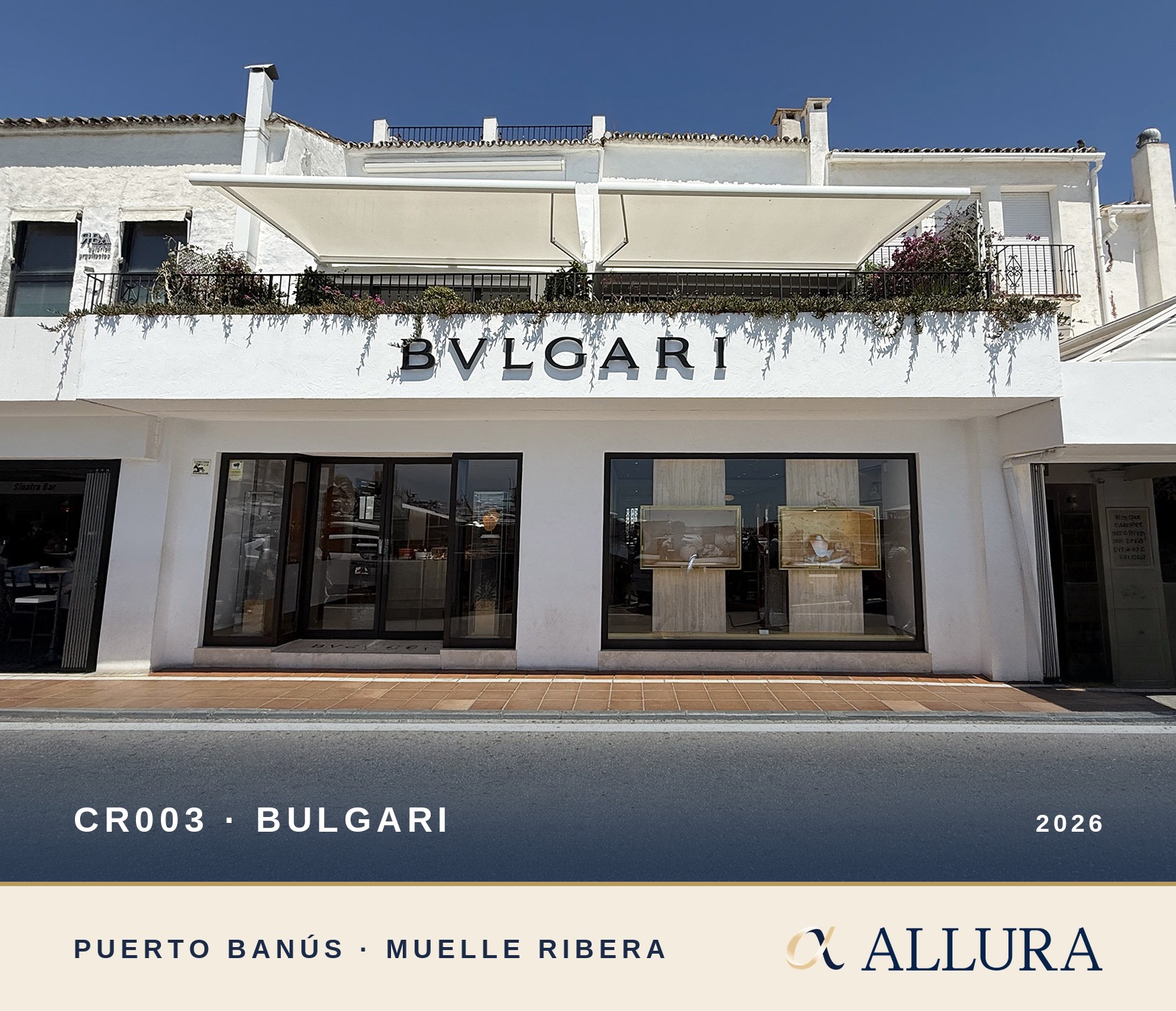
For finding your way, an image from years ago may be enough. For assessing a retail location, it can describe a street that has already moved on.
One Street, Many Formats
On a prime street, the most familiar reference is the key plan. Its value is real: it shows how a property sits among its neighbours, rather than treating an address as an isolated point. For anyone assessing a location, it is often the first document requested.
Key plans are produced for different purposes. One accompanies the marketing of a single unit, another illustrates a market report, a third supports a leasing mandate. Their format varies accordingly: what is shown, how brands are classifed, which base map is used and whether the plan is dated.
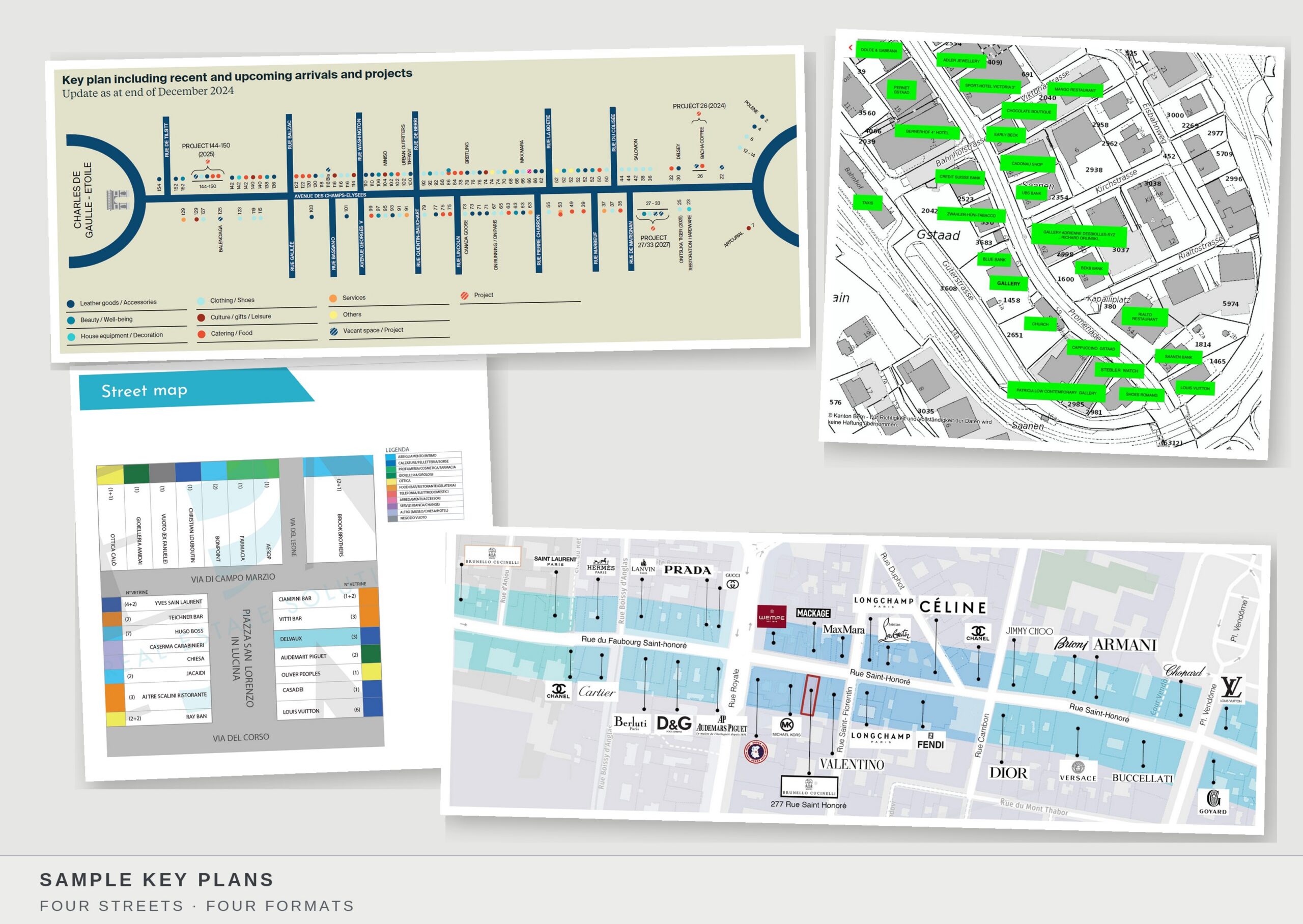
Read one at a time, each plan does its job. The difficulty arises when several are read together. A retailer comparing cities, or an owner benchmarking a property against other prime streets, first has to reconcile different formats, categories and dates before any comparison can begin. An undated plan can carry yesterday’s retail setting into today’s discussion.
The same questions in every market.
A different format every time.
Assembling them takes time as well. Understanding one street can mean contacting several agents; a pan-European view means repeating that exercise in every country. The local knowledge gathered this way is invaluable: agents understand landlord intentions, leasing dynamics and the conversations behind a vacancy. But the process is slow, and each market has to be approached in turn, even for simple questions.
Beyond key plans, a number of research houses have set out to map retail on a broader scale.
A Patchwork of Sources
Street-level retail data in Europe is well served in places. In France, Belgium and Luxembourg, Codata has compiled commercial real estate data for decades. Experian Goad fulfils a similar role in the UK and Ireland. Locatus, which began in the Netherlands before expanding into Belgium and selected major European cities, is now part of Green Street. Other platforms bring depth in footfall, catchment analysis and network planning.
Each is well established, and each was built to answer a broad question: how a national retail landscape is composed, how it performs and how it is changing. Regional towns, shopping centres, retail parks and neighbourhood parades sit alongside the high street in a single framework. For a planner, a landlord with a mixed portfolio or a national retailer, that breadth is the point. Prime high streets are one part of that picture, and often a small one.
Coverage also follows national lines. Each provider grew from a home market, and its reach beyond that market varies. None were designed to bring Europe’s prime high streets together as a single set, from New Bond Street to Bahnhofstrasse and Via Monte Napoleone.
For those concerned only with these streets, the need is narrower and deeper. A luxury house reviewing a handful of prime locations needs each one in detail, read the same way in every city. No single source yet offers a consistent, current view of those streets alone, down to the facade.
Bringing it Together
The challenge is to bring these different perspectives together: the address, its current occupier, its neighbouring brands and its physical frontage. For professionals working across borders, such a reference is only useful if it is consistently presented and clearly dated.
The distinctions matter. A future opening is different from a trading store; a temporary closure is different from a vacancy. A photograph records a frontage at a particular moment, while tenant information helps explain its status. Read together, they provide a clearer basis for comparing locations and deciding what to investigate next.
| Question | Usually answered by | What needs confirming |
|---|---|---|
| Who trades at this address today? | Retail databases, local agents | Survey date and any unit changes since then |
| Which brands sit alongside? | Key plans | Plan date, and whether it covers the full street |
| What does the frontage look like? | Online imagery, a site visit | Capture date and what obstructions may hide |
| What has changed recently? | News & brand announcements | Whether an announced opening has taken place |
| How large is the store? | Agents, landlords, brands | Whether the figure is total GLA or sales area |
A Common Reference Across Prime Streets
Allura Full Access brings together key plans, storefront photography and occupier information that are up-to-date for Europe’s prime retail streets.
Users can search by city, street or brand, review a location alongside its neighbours and move between the key plan and individual storefront photographs. Successive map editions record changes in occupation, with European city maps updated quarterly and Alpine and Mediterranean resort maps annually.
Full Access changes where the initial analysis begins.
For retail teams, this provides a starting point for reviewing existing stores, understanding competitors’ locations and exploring prospective ones. For owners and advisers, it places a property within its immediate competitive setting. In each case, conversations with the market can start from a shared, current and verified view of the street.
Allura Insights | November 2026
Europe's Prime High Streets - The Missing View at Street Level
Europe's prime high streets, mapped down to the door. All current key plans, storefront photography and tracked brand movements, combined in one platform.
Allura Real Estate Partners SAS may process data collected through this website.
Data Collection
We collect and process only the data necessary to provide our services, namely email addresses. Payment information is processed securely through Stripe Payments Europe Ltd., , our payment provider (Allura does not store credit card details).
Purpose and Legal Basis
Data is used exclusively to process purchases, deliver digital content, send receipts or respond to inquiries. Processing is based on your consent and limited to what is necessary to complete your purchase and provide the requested service.
Data Storage and Security
We store data securely and only for as long as necessary to fulfil the above purposes. Payment data is managed by Stripe, which is fully PCI-DSS and GDPR-compliant.
Data Sharing
We do not sell or rent your data. In certain cases, limited data may be shared with trusted service providers supporting our website hosting, payment, or analytics — notably Squarespace Ireland Ltd. and Stripe Payments Europe Ltd.
Your Rights
In accordance with the EU General Data Protection Regulation (GDPR), you have the right to access, correct, or delete your personal data, withdraw your consent at any time, request data portability or restriction of processing.
To exercise these rights, or for any privacy-related inquiry, please contact us at: marketmaps@allurarep.com.
© Allura Real Estate Partners SAS – All rights reserved.
This website is published by Allura Real Estate Partners SAS, a company incorporated in France with a share capital of 1.500 Euros, registered with Paris Trade and Companies Register under number 937 852 986 R.C.S. Paris, with EU VAT Number: FR56937852986, and having its registered office at 10 place Vendôme, 75001 Paris, France.
Contact email: marketmaps@allurarep.com
The website is hosted by Squarespace Ireland Ltd., with registered office at Squarespace House, Ship Street Great, Dublin 8, D08 N12C, Ireland (www.squarespace.com).
Allura Real Estate Partners SAS owns and operates this website. All content, images, and materials are protected with any reproduction, distribution, or modification requiring prior approval.
The information presented on this site is for general informational purposes only and may be updated or modified at any time.
© Allura Real Estate Partners SAS – All rights reserved.
Ian Kelley is a real estate advisor specialising in Europe’s prime high-street and luxury retail markets.
With over two decades of experience, his work spans leasing, investment and development.
At Allura, he operates at the intersection of strategy, leasing and market access, combining proprietary street-level intelligence with cross-border origination to connect property owners, leasing agents and brands across Europe’s leading high-street destinations.
He previously held senior roles at CBRE Investment Management and BMO Real Estate Partners (later part of Columbia Threadneedle Investments), where he founded and led the Paris office and built a pan-European platform exceeding €2 billion of high-street retail assets.
Earlier in his career, he was involved in commercial real estate development projects at Unibail-Rodamco-Westfield and Bouygues Immobilier, and began his career at Ralph Lauren, supporting the brand’s European expansion.
Ian is of French-American origin and studied engineering at the University of Massachusetts, before completing postgraduate studies in architecture and real estate at Columbia University and Harvard Business School.